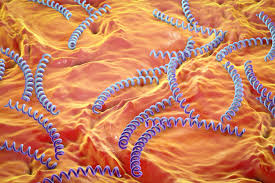
Syphilis is a sexually transmitted disease that is caused by Treponema pallidum. T. pallidum is a slender, highly motile spirochete (interesting side note – this bacterium cannot be seen using a Gram stain). It infects the genital area, lips, mouth, or anus of both men and women. Syphilis is usually spread through sexual contact with someone who is already infected. There are many clinical stages of the syphilis infection and these include primary, secondary, latent, and tertiary syphilis. T. pallidum easily infects mucous membranes and damaged skin cells therefore, the ID50 for this bacterium is very low (less than 100 cells). Most primary syphilis infections are characterized by painless red ulcers called chancres. Due to the painless nature of these chancres, many times this infection goes unnoticed. Symptoms seem to worsen as the infection progresses so receiving treatment as soon as possible is very important regarding syphilis infections.
Ghanem and his colleagues, who wrote The Modern Epidemic of Syphilis, conducted longitudinal studies following the rates of syphilis infections around the world. These researchers noted very important findings in terms of the epidemiology and transmission of this disease, for example, they noted that in 2018, men accounted for 86% of all patients with syphilis and more than half of men with incident syphilis reported having sex with men. Ghanem and his colleagues highlight the more recent syphilis epidemic in the United States that is affecting heterosexual men and women. They also noted that “between 2014 and 2018, the rates of primary and secondary syphilis among women have more than doubled”. Facts such as these should instill fear in all of the readers because this current epidemic is something I haven’t heard anything about (not even in the media). Though not much attention is being drawn to this subject with our current state of pandemic pandemonium, these researchers suggest that vaccine research for syphilis be intensified and studied more vigorously now more than ever.
Sexually acquired syphilis, an article written by Dr. Forrestel and her colleagues focuses on current treatment and prevention methods for primary syphilis infections. Luckily, primary and secondary syphilis are easily treated with an antibiotic like a penicillin. One issue arises with the treatment of tertiary syphilis, where the bacterium are no longer actively dividing (penicillin loves actively dividing bacteria). For patients with tertiary syphilis infections, large doses of intravenous penicillin are given. Dr. Forrestel and her fellow researchers believe that it will take the efforts of many people in many different fields including dermatologists, epidemiologists, immunologists, and many others to control the spread of syphilis. Prevention involves the AMC’s of prevention which is common among many sexually transmitted diseases so, in order to fully control the spread of syphilis, further actions need to be taken.

 Lauren Page's Blog