The flu virus and I have some complicated history.
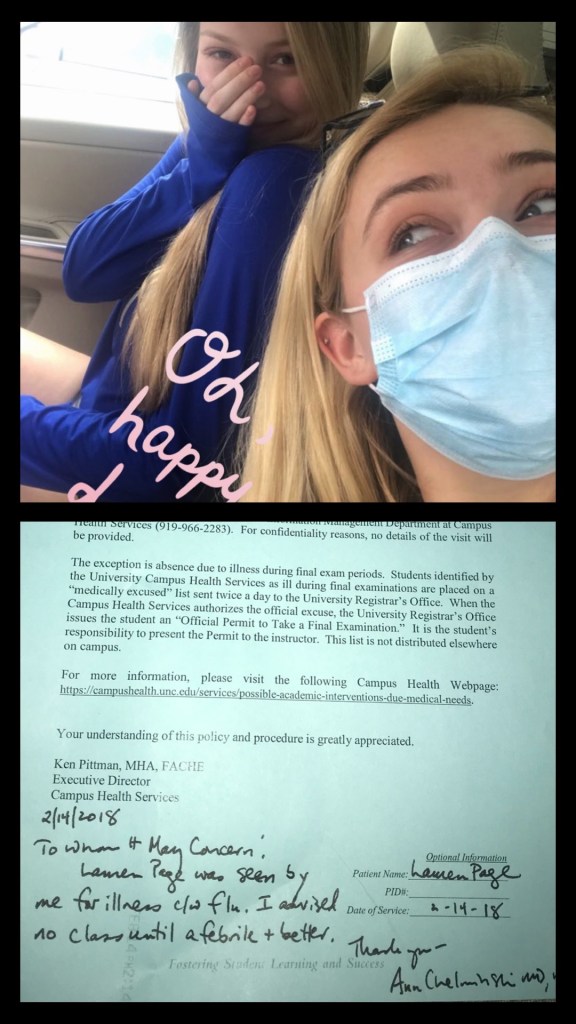
Pictured to the left is a brief account of the worst experience in my life.
Freshman year of college is stressful enough but luckily, the flu virus was able to sweep in and almost double my stress levels during midterm season. Being sick in a college dorm with roommates, shared bathrooms and most importantly, no mom to help me was a struggle, to say the least. A high fever, sore throat, runny nose, and pounding headaches lasted for about a week and a half and since none of my roommates wanted to come around “the infected person”, I spent most of that time alone with Netflix and a lot of makeup assignments. Luckily, I bounced back pretty quickly with some help from Panera soups, dining hall ice-cream and a lot of Neti Pots.
Wow, that sure is a lot of complaining for someone who didn’t get a flu shot.
The 2019-2020 flu season is among us and it is coming in hot. Influenza is an acute respiratory illness transmitted by the influenza virus. There are four types of flu viruses but Influenza A and influenza B take up a majority of clinically significant influenza infections. Influenza virus is spread from person to person by the inhalation of respiratory secretions from someone who has the disease or by fomites. The incubation period is relatively short spanning from about one to four days and initial symptoms include high fevers, intense myalgias, headaches, and anorexia. Other symptoms may arise throughout the course of infection but all clinical signs and symptoms of influenza should subside after about one to two weeks. As seen with all viral infections, antibiotic treatment is not effective in eradicating the influenza infection but vaccination is used to prevent the spread and infection of this virus.
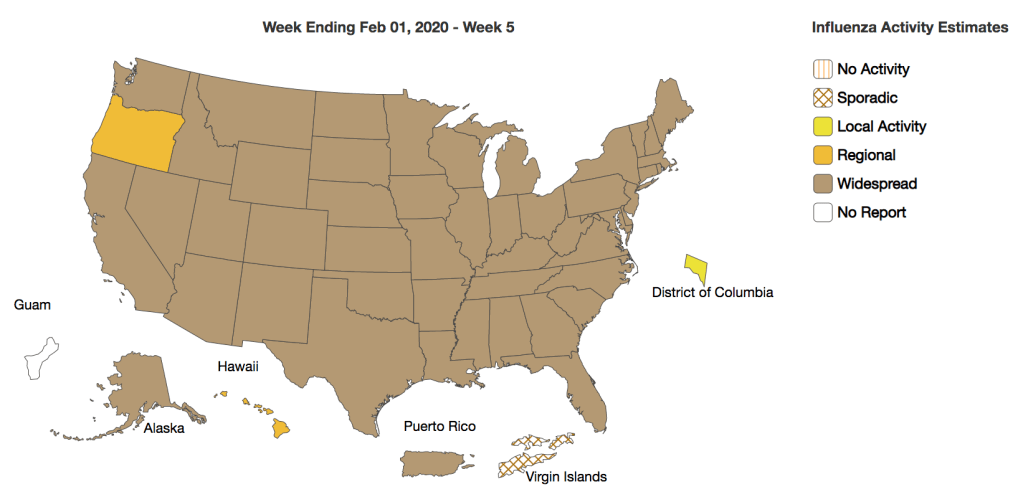
So far this year, clinicians have observed a large rise in cases when compared with previous flu seasons. Taming of the Flu: An Update on What’s New written by Michael Ullo and Gregory Sugalski evaluates influenza and the trends that are being seen for the current flu season in the US and around the world. As of November 2019, “flu activity is above or at baseline with the majority of cases concentrated in the South and West”. Ullo and Sugalski also note that so far this season, influenza type B is responsible for a greater number of cases compared to type A. The CDC Weekly Flu Index is full of very useful and up-to-date information regarding the current state of influenza infection. After week 5 of the flu season, “the CDC estimates that so far this season there have been at least 22 million flu illnesses, 210,000 hospitalizations and 12,000 deaths from flu”. Pictured to the right is a map of the United States that estimates influenza activity by state. Almost every state is labeled in the brown color showing that the infection is “Widespread” in that area (Oregon got lucky I guess).
Since antibiotic therapy remains unavailable for influenza, vaccination is the cornerstone for primary prevention of the flu. Every year, new strains of the virus develop so scientists reformulate vaccines annually to match the circulating strains. Elizabeth Frentzel and her colleagues discuss yearly influenza prevention and vaccination rates and efficacy. Frentzel and her teammates found that “the effectiveness of the influenza vaccine varies widely from 19% to 60% over the past 10 years”. There are currently three types of influenza vaccines available in the United States but for the 2019-2020 flu season, trivalent and quadrivalent vaccines will be available. More specific data will become available regarding vaccine effectiveness as the flu season comes to a close but for now, let’s just stay healthy
Some Tips:
– Avoid close contact
– Stay home when you are sick
– Cover your mouth and nose
– Clean your hands
– Avoid touching your eyes, nose or mouth
– Practice other good health habits

 Lauren Page's Blog