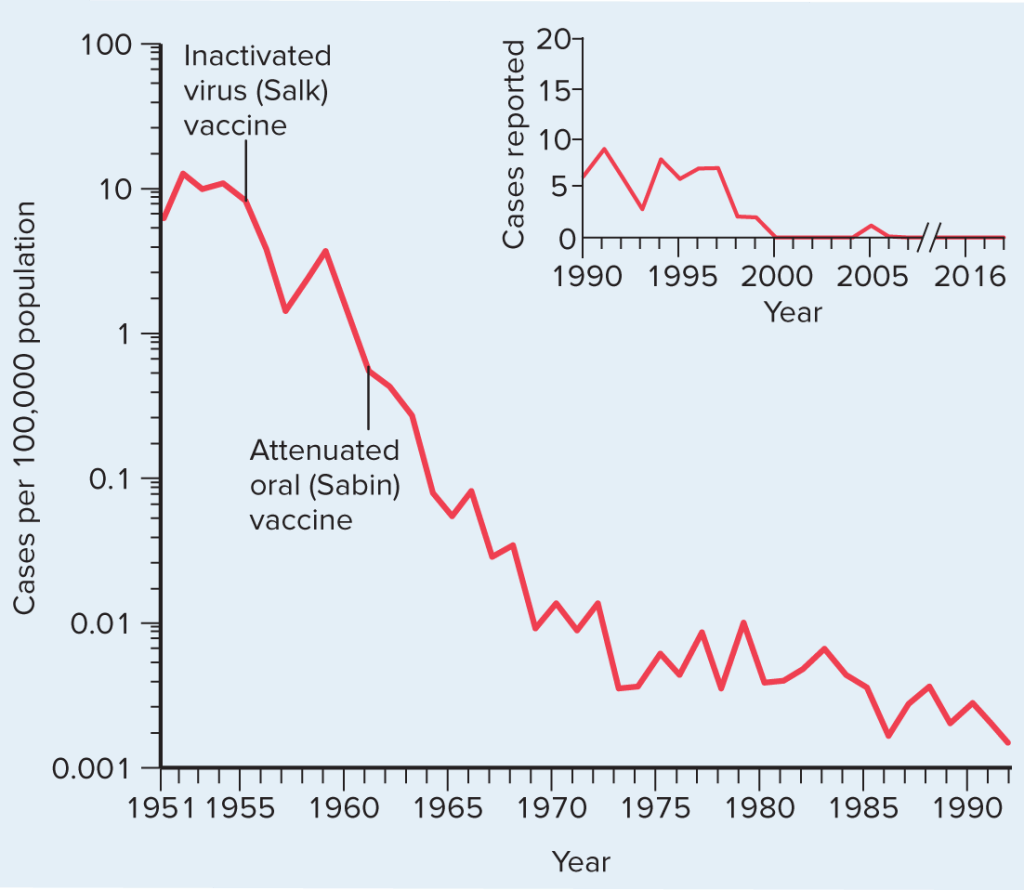
Poliomyelitis (polio) is an infectious viral disease that is characterized by the destruction of motor neurons which results in temporary or permanent paralysis of a group of muscles. The virus mainly affects children under the age of 5 and in the 1950s the world experienced various tragic polio epidemics which took the lives of millions of people. According to the World Health Organization, “polio does still exist, although polio cases have decreased by over 99% since 1988”. Within the last 6 months, concern remains among immunologists, doctors, and scientists because countries like Afghanistan, Pakistan, Angola, Côte d’Ivoire, Ethiopia, Ghana, and the Philippines are still seeing new cases of polio weekly (polioeradication.org). Two polio vaccines are commonly used throughout the world to protect against poliomyelitis. The first was developed by Jonas Salk in 1952 and the second was an oral vaccine developed by Albert Sabin in 1961.
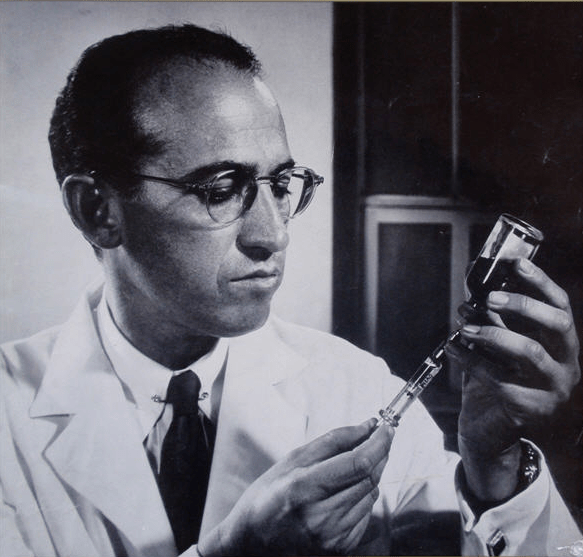
Pictured to the left is Jonas Salk who created the inactivated polio vaccine (IPV or Salk vaccine). This vaccine is composed of inactivated poliovirus strains and after being developed in the early 1950’s it lowered the rate of disease dramatically. According to Mamun and his colleagues, one disadvantage of the IPV is that it requires a series of injections to ensure maximum protection. Immunologists have developed a new method of production so the IPV is still available today. Although the OPV seems to be preferred by most clinicians today, some are theorizing that the IPV will make a return and become the primary vaccine for polio in the near future.

Pictured to the right is Albert Sabin who, in 1961, created the oral polio vaccine (OPV or Sabin vaccine). This vaccine is composed of attenuated strains of the poliovirus that replicate in cells that line the throat and intestinal tract. In comparison to the IPV, this vaccine is cheaper, administered orally, and it induces better mucosal immunity. Zimmermann, Hagedorn, and Lyons discuss polio prevention efforts and emphasize that one disadvantage to the OPV is that the attenuated viruses can mutate and become virulent. An original goal set by epidemiologists was to have polio completely eradicated around the world by 2000. Although this goal hasn’t been met, many individuals around the world are still working towards new techniques and methods to meet this goal in the quickest and most efficient way possible.

 Lauren Page's Blog